Showing posts with label Steve Harley. Show all posts

Sunday, August 25, 2013

Steve Harley - Hobo With a Grin


Hobo With a Grin (1978) ***1/2

Well, Steve's finally put the left & right sides of his brain together and delivered his best album since The Best Years of Our Lives.  While it's primarily a heartfelt singer-songwriter album, Harley doesn't entirely ignore the musical side of things, nor does he flake out with too much poorly conceived experimentation.  Oh, and it's his first "official" solo album, but we all know that hasn't mattered since the first pair of Cockney Rebel LPs.  Anyhow, this is perhaps Harley's most soulful album to date.  Previously, Harley's lyrical motivations were shrouded in an enigma encased in a mystery, but the lyrics here aren't terribly difficult to figure out most of the time.  One aspect of Harley's persona to be noted is that the man apparently is a sincere Anglican and judging by some of his politically-oriented lyrics here and elsewhere ("Red is a Mean, Mean Colour," remember that one?), he's of at least a mildly conservative temperament.  Thus we get the worst track, the misguided funk excursion, "(I Don't Believe God) Is An Anarchist," which could be a specific rant about punk or a more generalized rant against nihilistic youth culture in general.  He's sick of revolutions that never improve the general lot anyway, but it's not the lyrics that let me down (the message is fine - Harley's just a conservative in the Edmund Burkean sense, which is to say the most respectable kind), it's the gratingly hamfisted funk.  When will Steve get it drilled into his dancing feet that the whitest of white Englishmen have no business shaking down like he's Sly Stone?  That track aside, the rest of the album will neither impress nor offend you, musically speaking, though it may bore you if you're not so inclined:  it's just standard-issue soft-rock, sometimes lively and rollicking (the lead single "Roll the Dice"), sometimes narcotically soothing ("Riding the Waves (For Virginia Woolf").  The message of the most overtly political tract, "Hot Youth," may seem a recitation of headline doggerel at first, but it's not too hard to figure out with a bit of concentration.  Harley's simply observing that politically disaffected youths will always be angry no matter what the specific political situation; if there wasn't a wall in Berlin, there'd be another wall to climb over.  The peppy "Amerika the Brave," employs Columbus as a metaphor for how the U.S. is a magnetic dragnet for modern day Europeans like himself.  And once you realize that the 'someone' in "Someone's Coming," is the return of Jesus, it all falls into place lyrically.  As if a title like "Faith, Hope and Charity," didn't make it clear where Harley's heart was around this time, spiritually speaking.  Which must have been a good place, if it produced such warm and soulful ballads as "Living in a Rhapsody," a tune that oozes the essence of Steve at his most tender, emotionally sincere, and moving.

The selection for bonus tracks are quite bafflingly random, as both of the two were nowhere near 1978.  "Spaced Out," was an early Cockney Rebel B-side; it's fine but nothing special fiddle-pop and is quite jarringly placed here.  "That's My Life in Your Hands," is a live recording of a number that would resurface nearly two decades later (in a studio version) on a '90s Harley comeback album.  It's breathlessly rushed folk-pop, but it doesn't come from this era, either - apparently recorded sometime in the '80s when Harley was on his decade-long recording-studio retirement.


Saturday, August 17, 2013

Steve Harley & Cockney Rebel - Love's a Prima Donna


Love's a Prima Donna (1976) **1/2

C-c-c-c-cocaine!  Well, I have no idea what Steve was strung out on, if anything, while recording this album, but this was the '70s and I think if you squint hard enough you can spot an inflamed nostril on the cover.  As if that embarrassing cover wasn't bad enough, the rest of the album lives up (down?) to its mixture of the tawdry and the tasteless.  It's as if Timeless Flight and Prima Donna, released within a short time span of each other, schizophrenically split Harley's musical personas:  one the overly sincere singer-songwriter, and the other the wildly experimental oddball.  And if you've got a definite preference for the latter over the former, then fine - reverse my ratings for your own personal pleasure.  I've always thought that the worst artistic crime was boredom, but I may have to rethink my aesthetics:  crass and tasteless sometimes loses out to bland tedium.  Anyway, this album finds Steve desperately reaching back into his bag of cheap tricks to harken back to the first two Cockney Rebel LPs' glory days of weird'n'flakey out-there pop:  but the rather faceless musicians here are no match for the original Cockneys, and the attempted oddball hooks are little too gaudy and obvious to be truly hooky.  Harley is clearly straining to be weird and experimental here, and you know what?  Genuinely eccentric people don't have to go overboard to prove that 'I'm not like everybody else' - natural non-conventionality just oozes out.  Generically average people are the ones who have to dress up in costumes to prove that they're 'different' - y'know, like this Lady Gaga dame I keep hearing out.  Mark E. Smith didn't have to wear anything more shocking than a beige sweater for it to be obvious that he was some sort of clinically insane, demented semi-genius.

Anyway, this album reeks of coke in a very specifically '70s rock star way, and you know exactly what I mean.  It's a "let's throw a bunch of halfbaked ideas against the wall that sound great when we're stoned and see if any of it sticks.  A lot of it doesn't?  Oh, what the hell, just leave it on the record, we're running late for another party," kind of album.  The first three songs rush by as a mini-Abbey Road suite, fragments that can't really stand on their own but sort of work stitched together.....I said sort of.  That said, that's probably my favorite stretch of the record, unless you count, "(Love) Compared With You," a nearly hookless Lennon-ish piano ballad that sounds like it accidentally wandered in from the previous album.  It probably did - it sounds like an inferior outtake from Timeless Flight - but for all that, it's still a relief from the ADD-addled flurry of the rest of the record.  The title track was an obvious bid for a hit single in the "Make Me Smile" vein, and while it's more than a few notches inferior, it's effective in its crude, classless way.  That hook is way too obvious and in your face for a man who once counted subtlety as one of the chief weapons in his arsenal.  The cover of "Here Comes the Sun," was an even more obvious shot at the charts, and sadly, a successful one:  the gracefully flowing George Harrison tune is drowned out by a tacky armada of dated synths.  There's some painfully obvious filler in the form of soundtrack muzak, and the preposterous 7-minuto epic, "Innocence and Guilt," which combines some cringe-inducing electronically-treated vocals with state-of-the-mid-'70s sound effects; it comes across as almost sublimely silly at points, but mostly is just silly.  And horribly dated.  And overall, Harley's in noticeably weak vocal form throughout - he strains so soulfully that you can sometimes hear his voice crack.  Anyway, he can still come up with lines like, "You give me loving like wanking in a dream," on the not-bad-at-all "(If This is Love) Give Me More".  But after all these years, I'd still like to know why the man overabuses hyphens.


Saturday, July 27, 2013

Steve Harley & Cockney Rebel - Timeless Flight

H

Timeless Flight (1976) ***

Reviews are subjective by nature, and while I honestly enjoy this album a bit more (considerably more on a good day) than the three stars indicated above, that's simply because I like Steve Harley.  No, I don't mean that I know him personally - he could be an asshole in real life, for all I know or care.  He's got one of those rare voices that simply oozes warmth and charisma - a bit like Roger McGuinn does (did?), with a similarly friendly, slightly straining tenor.  The Cockney Rebels are present in name and perfunctory backup musicianship only:  this is the album where Harley apparently decided to make his gambit for serious singer-songwriter.  What that amounts to in practice is that we get an entire album's worth of mid-tempo, folky pop/rock songs stripped of any extraneous instrumentation that distracts from the words and the vocal delivery of those words - Harley's a man with a message, kids.  Exactly what that message is remains unclear, shrouded by metaphoric obscurity even at its most topical ("Red is a Mean, Mean Colour," character assassinates Bolshevik U.K. politicians with Cold War paranoia, but you'd never guess that unless you already knew to look for it - then it all falls into place).  Oh, "Understanding," is straightforward, alright -  in a rather gruesome way.  Harley had written love songs before, but never so bitelessly banal.  "Don't Go, Don't Cry," is the second album lowlight - mellow funk was never Harley's forte; it rocks so mildly it inspires little more than toe-tapping, never mind booty-shaking.   The rest of the album's six cuts are alright - just alright. nothing more; perhaps with the exception of the twilight loveliness of "All Men Are Hungry," the surefire cut-out for compilations.  Harley almost seems intent on sheer hooklessness, avoiding any of his trademark oddball hooks that made him interesting in the first place - perhaps he thought those too gimmicky and glam too juvenile, but now he's grownup and making mature music for serious consideration.  And if there's usually a recipe for a formerly exciting artist slipping into menopausal boredom, that's it.  The album initially comes off as drab and monochromatic as its cover:  classic Cockney Rebel swirled in kaleidoscope; solo Steve Harley steeps briskly in Earl Grey.  However, adjust yourself to the sad reality of a deeply ordinary, musically unadventurous singer-songwriter album and you've got quite a good one - that is, if you're predisposed to like Mr. Harley and his sense of songcraft already.  The album is too laidback by half - more Gordon Lightfoot than Bob Dylan, but hey I like Lightfoot, too, mellow easy-going melodics and all.  "Nothing is Sacred," essays the best of that Lightfoot/Dylan style, over five breathless (literally) minutes of verbiage with no room for any other than a torrent of words.  It's off-putting at first, but give it some time and it becomes cozy and comfortable.  Same as the rest of the album.


Monday, July 22, 2013

Steve Harley & Cockney Rebel - The Best Years of Our Lives


The Best Years of Our Lives (1975) ****

Goodbye, Cockneys; hello, Steve.  For whatever reasons of ego or dissension, the original Cockney Rebel broke up prior to this release, with only drummer Stuart Elliott to follow the leader.  The music subsequently takes a drastic nosedive in terms of musical identity - precious little of the quirk and charm of the first pair of Cockney Rebel albums; instead it's mostly straightforward mid-'70s pop-rock soaked in by-then-conventional glam negligee.  Around a decade or so ago, I made this my first toedip into Harleyland, and while I enjoyed quite a few of the songs, I couldn't quite figure out what the fuss was:  he seemed like an entertaining, but highly derivative johnny-come-lately of Bryan Ferry and David Bowie.  Now that I've heard him within the context of the first two Rebel albums, I can discern his unique talents; but it is only through that prism that one can distinguish every subsequent album as anything more than well-crafted, sometimes excellent but non-earthshaking mainstream '70s rock.  Steve Harley the talented singer-songwriter remains intact, but Steve Harley the musical visionary has departed the building.

Get over that and what you are left with are 'merely' some great tunes with enticingly delivered vocals and cryptically intriguing lyrics.  In fact, with Harley playing it relatively straighter (lyrically and musically), the songs are more immediately catchy and emotionally rewarding than anything off of the first pair of records.  The title track may be a put-on, full of Dylan-esque straining towards grand import and emotional resonance, despite amounting to little more than a string of non-sequiturs  - "Lost now for the words to tell you the truth / Please banter with me the banter of youth" - but damn if it isn't improbably moving in spite of itself.  Harley may be putting on the mask of the sensitive troubadour for sport, but he sings richly (ah, that vocal may be the performance of his career) with such actor's conviction that he completely and convincingly inhabits the form.  "Make Me Smile (Come Up and See Me)" is the track that towers above all the rest, however - center-pieced dab in the middle, and Harley's only #1 hit.  Deservedly so:  it's simply one of the greatest pop singles of all time, full stop.  Harley's crisp crooning over the lush but sprightly bed of acoustic guitars and cooing background oo-la-la vocals, as he alternately disdains and implores his potential conquest - you'll think it's tragic, but it's magic, it's the best single of 1975.  And that Spanish guitar break is pure icing.  "Mr. Raffles," was the more than worthy follow-up, not quite as magical (how could it be?) but a hit in its own right, and one of Harley's most lyrically intriguing:  late-period Dylan gone Elton John is the best I could describe it, with the clever sound effect of cracking maracas immediately after the "you shot that Spanish dancer," line always giving me a chuckle.  The paranoid, "Back to the Farm," is the key 'deep album track', a moody set-piece that is very, very Roxy-esque, underscored with Eno-esque synth squeals if you missed the point.  If I had to pick a weak track, it would either be the mild (very mild) quasi-funk of "49th Parallel," or the atmospheric but hookless, "It Wasn't Me," all drifting six minutes of it.  But neither are bad, just forgettable - this may not be Harley's most adventurous album, but it is perhaps his most consistently tuneful one.

Bonus tracks:  "Another Journey," is a melodic gem that should've graduated from B-side to album track (replacing either one of the two aforementioned weaker tunes).  The live version of "Sebastian," stretches on for nearly 11 minutes, which isn't undeserved, and certainly gives Harley's vox a good workout - if you want to hear the man at his most throat-shreddingly impassioned, here you go.  Maybe "somebody called me Sebastian," actually did mean something deeply personal to Steve, after all.

Stupid coat.


Friday, July 19, 2013

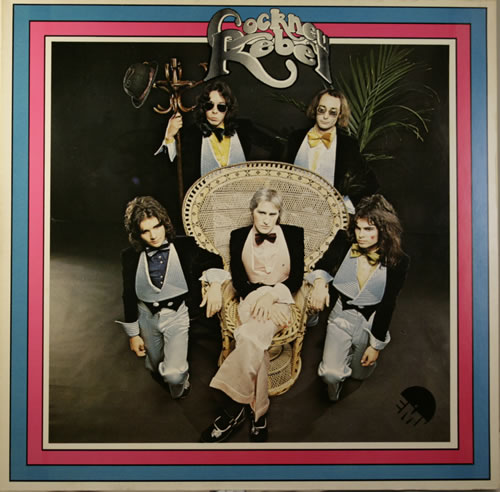
Cockney Rebel - The Psychomodo


The Psychomodo (1974) ****1/2

 A dash more rock and a new ingredient of Doors-y swirling carnival keyboards:  the rock'n'roll circus is in town.  It's ever so slightly superior to the debut (and I can easily see others switching my ratings between the two) due to the songs being somewhat more straightforward and more immediately hooky - a year's span had apparently given Harley time to sharpen the soft focus of The Human Menagerie into more consistent songwriting.  It comes down to a battle between the debut and the followup's pair of twin epics.  The ridiculously over-phased, repetitive "Ritz," almost sounds like a parody of glam psychedelia, the sort of goof that Ween might have written if they'd ever tackled a mock of that genre - but wait, when's the last time you ever heard any glam psychedelia?  Todd Rundgren?  Aladdin Sane?  It may be meaningless, but it's a gas - man.  Perhaps it wasn't the brightest of ideas to sandwich that one and "Cavaliers," back to back - these two plodding Big Statements take up nearly sixteen minutes between the two of them, nearly sucking the life out of the record.  Not that either are bad, but a pair of draggy, druggy epics in a row?  I do see that on the original vinyl that they weren't back to back, actually - one closes side one and the other opens side two.  Nevermind - "Cavaliers," is even better (though, again, I do see how another person might switch the preference for "Ritz"), with jumbo-sale '67 Dylanisms rousing up to the gospel, "Testify, testify, testify" chorus.

But as if a photo negative of the debut, it's not the overblown epics that dominate the record, but rather the shorter, snappier tunes.  The title track swings propulsively (contradictory as that may sound) on rinky keyboards lifted from the puppet show, as Harley sings agitatedly and affectedly (another contrast!) about Quasimodo, George Orwell, ex-Beatles, and suicidal streets.  "Mr. Soft," the lead single, is mighty odd material for a hit A-side:  a dark and stern yet baby-bouncy Kurt Weill-ish waltz-march that oomphs and chugs along with a sinisterly creepy circus clown's grin.  It conveys the funhouse-mirror dark side of the carnival better than almost anything the Doors ever did.  The bright'n'raffishly charming sleaze-pop of "Bed in the Corner," might have made a better choice as single, with its irresistible melodic lilt and identifiable failed-rake lyrics; but it's inextricably intertwined with the electric violin-fest of "Sling It!" that buzzes in the ears like a thousand mosquitoes in tune - the way the initial mid-tempo pop tune meshes into the high-energy dance stomper makes for one of the most startling track-to-track mash-ups ever.  And then the album crashes down on its final and mightiest (?) tune, "Tumbling Down," which could be called yet a third epic or just another pretty pop tune:  it begins as a standard, meandering Elton John-ish piano pop song, as Harley winds his way around typically enigmatic poeticisms concerning the Titanic, the Hemingway stacatto, and suchlike.  It's all a pleasant enough stroll down the long and winding road, until it slowly builds up to the, "Oh dear, look what they've done to the blues, blues, blues?" closing chorus - and then it's sheer magnificence.

P.S.  The reissue appends two bonus tracks, the single "Big Big Deal," which is rather unexceptional.  It's bit baffling as to why this was chosen as an A-side when it sounds like a slightly inferior outtake from the accompanying album.  The B-side "Such a Dream," is a novelty track that stretches two minutes' worth of one-trick pony shock tactics for over five minutes.  Offbeat novelties that weren't quite worth the musical meat to graduate to LPs are the reason why B-sides were invented.


Monday, July 8, 2013

Cockney Rebel - The Human Menagerie


The Human Menagerie (1973) ****

The reviewer is left stumped trying to describe this album.  Not that the music itself is all that out-there; this is first and foremost a creamy pop album, gentle and strange and full of accessible melodicism (if non-obvious hooks; but a little work digs the hooks out eventually - and they're worth the digging).  Making their entrance at the height of glam's heyday (just at the tail-end when the decline of glitter-rock as a commercial and artistic force was setting in) the Cockney Rebels bear some superficial similarities to early Bowie, Queen, and (especially) Roxy Music.  But like Roxy, the glam tag only superficially suits them:  the music is a mite too complex and art-rocksy (but definitely not prog), not to mention idiosyncratic, to fit comfortably within any genre boxes.  Unless you count that vaguest of genre terms, Art Rock - yeah, that fits the bill.  Or more precisely, Art Pop, since one of the album's gimmicks is No Electric Guitar! - instead, the primary stringed instruments are trusty acoustics and Jean-Paul Crocker's electric violin.  The rhythm section don't so much rock as roll, adding a distinctly calypso feel to a number of tracks (dig those vibes).  Add splashes of lounge-lizard keyboards and Steve Harley's distinctive tenor vocals, and you might begin to describe the basic formula - but your ears are better than my feeble words; this stuff is just too sui generis to peg.  Harley's vocals are almost as idiosyncratic as the instrumental backing; perhaps a bit too Cockney for some, and he's definitely mincing some affectations in his enunciations, but much pleasanter on the ears than his closest cousin Bryan Ferry, and betraying a clear Ray Davies influence.  And like the Kinks, Harley bears the distinctive stamp of (decidedly British) music hall, with an extra-strong dose of camp theatricality.

But unlike R. Davies, Harley's lyrics are anything but straightforward - on first scan (and second, and thirty-third)  they seem like disassociated, randomly 'poetic' lines that make no literal sense but simply sound good.  And half the time you'd be right.  What does the gloomy epic (complete with 50 piece orchestra!) "Sebastian," mean, if anything at all?  The way Harley portentously croons, "Someone called me Sebastian," with orchestral crescendos billowing behind the chorus, artificially inflate it to importance, but really - does even Harley himself understand what the song's about?  "Your lips ruby blue, never speak a sound"?  Harley's lyrics flow with the non-linear logic of dreams, and combined with the eccentricities of the music, give the album a bit of a surrealist feel.  The album's other extended epic, the nearly 10 minute, "Death Trip," makes only slightly more (less?) sense, and contrary to title, isn't gloomy or gothy at all - just soft piano pop with sawing violin and orchestra surging in the background.  The remaining eight songs are considerably shorter and poppier than those two epics, with the opener, the Spanish guitar driven "Hideway," being of particular excellence, and the weakest track, the fiddle-dance "Crazy Raver," being only slightly irritating and only slightly weak.   Unless you count as weakest, "Chameleon," which at 49 seconds swings by too fleetingly to really register.  "Mirror Freak," with its reference to a certain narcissistic elf, is indeed about Marc Bolan, for you rock trivialists.  Appended to the reissue are two bonus tracks:  the rhythmically intricate "Judy Teen," single, with the main hook residing in the stop-start of the rolling drums; and the B-side, "Rock and Roll Parade," which in actuality is more square-dancing fiddle-pop.

A very strong four stars, then - almost four and a half, but I like the next one even better.